


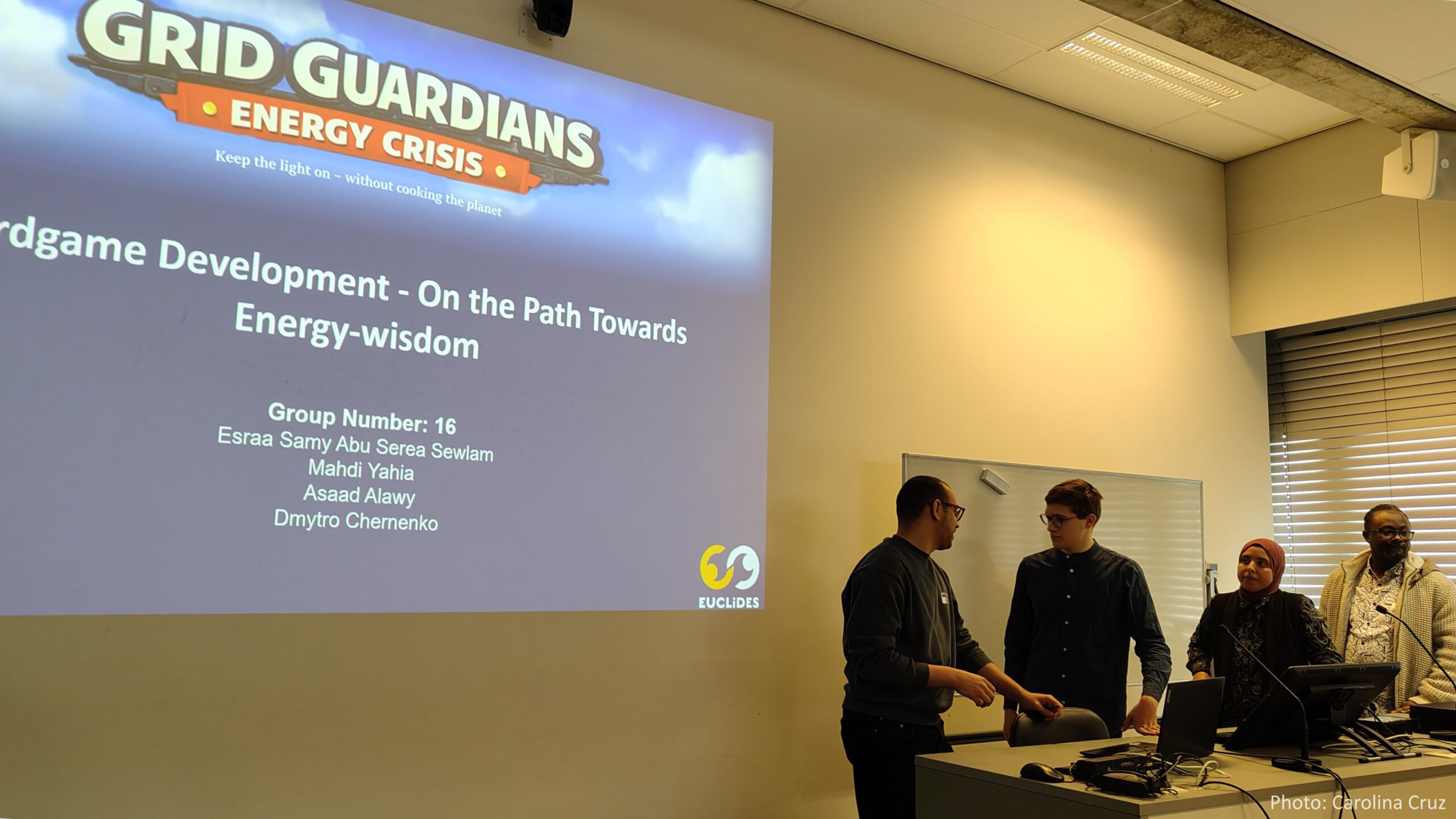
From 23rd to 26th of March, students from Dortmund University of Applied Sciences and Arts (FH Dortmund), KU Leuven and the University of the Basque Country (EHU) met in person to continue their work on Virtual Cross-Border Project, a long-term initiative within the Erasmus+ NomadTrail project. The students had started the project online before travelling to the onsite phase. Meeting face-to-face gave them the opportunity to get to know each other better, exchange ideas more directly and move forward with their shared project.
The group task focused on the development of a boardgame app around the theme “Smart sustainable food production and technology of the future”. The students worked together on the concept and prototype of the app, bringing in different perspectives from their universities and academic backgrounds. The project follows a cross-border, project-based learning approach. It combines online collaboration with in-person teamwork and gives students the chance to apply their knowledge to a practical challenge. The work brings together areas such as sustainability, project management, digital transformation, engineering technology and app development.
During the onsite phase, the students focused on shaping their product idea, refining the structure of the prototype and preparing to present their progress. The in-person format helped them organise tasks, discuss possible solutions and build a clearer shared vision for the app. The initiative is coordinated by Peter Arras from KU Leuven, Carsten Wolff from FH Dortmund and Carolina Cruz-Villazón from EHU. Their role is to support the students throughout the process and guide the academic development of the project.
This phase also highlighted the value of blended international learning. By combining online collaboration with short-term mobility, students were able to experience a practical and flexible way of working across borders. For the university community, the initiative creates opportunities to strengthen international cooperation, connect academic learning with real project work and encourage students to develop skills in teamwork, communication and intercultural collaboration. After the onsite phase, the students will continue working online as part of the long-term project, with the aim of completing and presenting the final app prototype later in the process.